
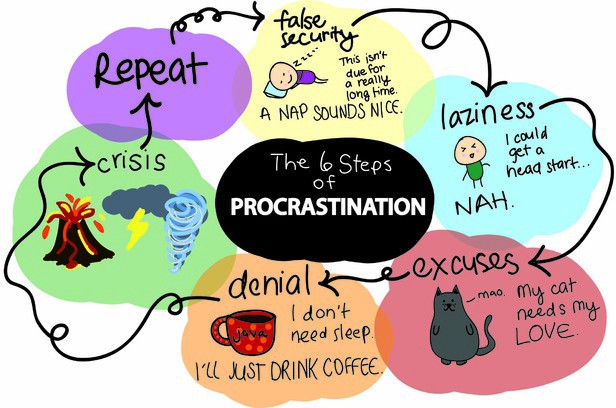
Ever wondered why you “just needed a break” — and suddenly that break turned into weeks, months, sometimes even a year?
I recently read that procrastination affects 1 in 5 people. Around the time mental health conversations started booming, procrastination became a hot topic too. At first, I dismissed it. I thought people were just getting creative with excuses. I told myself that if I thought too deeply about it, I’d only end up justifying laziness.
The current version of me? I’d call that a dumb idea.
Before I truly understood procrastination, I saw it as a lack of discipline. Homes and workplaces often treat it that way too — as an excuse to avoid work. But when I found myself avoiding something I genuinely loved, I had to pause.

Why was I lazy about work I cared about?
Why was I underestimating tasks or overthinking them?
Why was I letting thoughts hover over me when I could have been productive and fulfilled?
After some research, I realized something important: procrastination wasn’t random. It was the result of small habits slowly going wrong.
Here are the three mistakes I made.
1. Perfectionism + Fear of Failure

I love what I do — reading books, writing blogs, critiquing shows and cinema. It feels like my own little creative universe.
But I come from an Indian family where career success is often measured in income and stability. Doctors, engineers, lawyers, business people — those are the “safe” options. The mindset is simple: earn fast, retire early. And while times are changing, that pressure still exists in many homes.
Being a writer? It doesn’t always look financially secure — especially in your twenties.
Now add perfectionism to that equation.
I’m the kind of person who wants everything to be 90% guaranteed to succeed before I put it out there. A blog, a pitch, even my room — it has to be “right.”
The problem? Perfectionism rarely comes alone. It brings fear of failure with it.
Instead of thinking, “I’ve done my best — let’s see how it goes,” my thoughts sounded more like:
- What if this isn’t good enough?
- What if my grammar isn’t perfect?
- What if I post it and it’s a disaster?
- What if it doesn’t earn anything?
Slowly, writing stopped being exciting. It became heavy. Even planning topics felt stressful. It wasn’t writer’s block anymore — it was a roadblock built by fear.
And fear disguised itself as procrastination.
2. Unclear Goals + Poor Time Management

One of the hardest lessons I learned is this: creativity needs structure.
When I didn’t have a routine or clear goals, I told myself I was being “flexible.” In reality, I was being inconsistent.
If you don’t know what you’re working toward — whether it’s building an audience, monetizing your site, or simply improving your craft — you drift. And drifting leads to delay.
I would write in multiple niches. After a few blogs, I’d feel unsure. Maybe I should switch topics? Maybe this isn’t working? Maybe I should pivot completely?
Constantly changing direction made it impossible to build an audience.
And here’s something I realized the hard way:
A routine isn’t a routine if you don’t follow it consistently.
It doesn’t have to be every single day. But it has to be intentional. If you decide on three focused hours, those three hours need to be respected. Otherwise, “I’ll do it later” quietly becomes “I haven’t done it in weeks.”
3. Low Productivity + Underestimating My Own Work

There were phases when my website was doing well. Ideas flowed easily. Writing felt natural.
Then I started choosing topics I wasn’t excited about — just because they sounded good or strategic. The writing wasn’t bad. But it lacked heart.
And readers can feel that.
When I finally checked my website analytics, the views had dropped. That’s when reality hit. I wasn’t fully present in my own work. I was writing without connection, without challenge, without genuine curiosity.
Slowly, I stopped writing altogether.
I read books. I watched shows. I consumed content.
But I didn’t create it.
And when I finally sat down to write again, I faced a blank page.
It wasn’t that I had nothing to say.
It was that I had disconnected from why I started.
Why It Really Happened

Looking back, procrastination wasn’t laziness.
It was boring.
It was insecurity.
It was a comparison.
It was fear of not being “enough.”
I was typing, but disconnected from my bigger dream. My emotions overpowered my discipline. I started believing maybe I had nothing valuable left to offer.
But here’s what I’ve learned: if something you once loved starts feeling heavy, don’t immediately label yourself as lazy. Pause. Ask yourself what changed.
Are you bored?
Are you scared?
Are you trying to be perfect instead of being real?
Procrastination isn’t always about avoiding work. Sometimes it’s about avoiding vulnerability.
If you’ve experienced this too, know that you’re not alone. And maybe the solution isn’t pushing harder — maybe it’s reconnecting with why you began in the first place.
See you in the next one. Ciao. ✨


Leave a Reply