
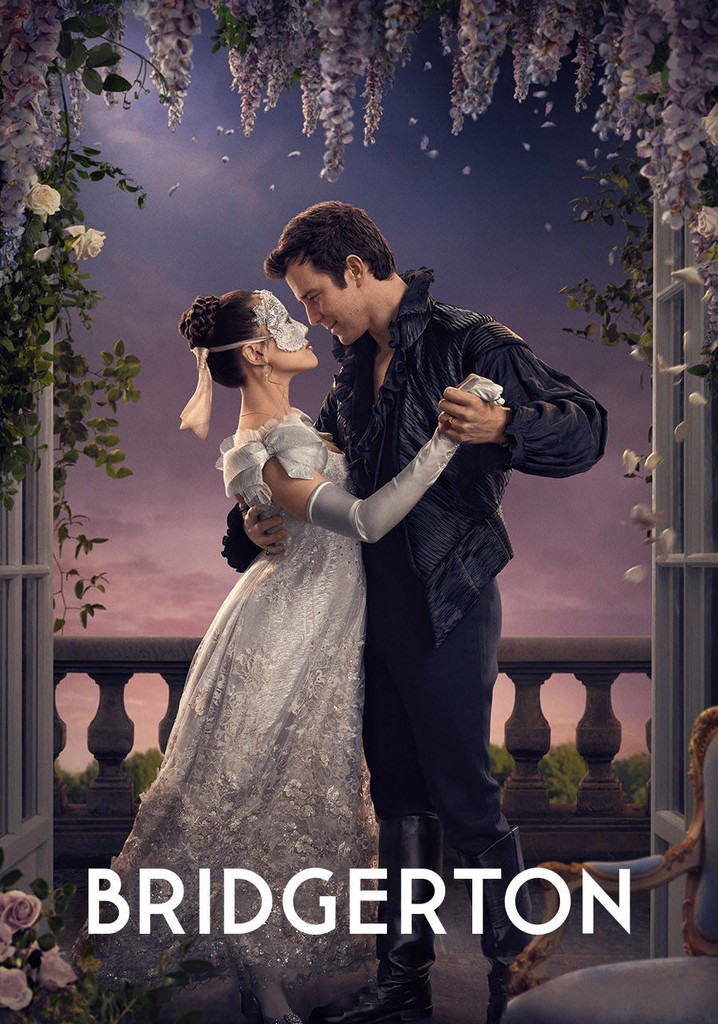
The Quiet Fires: Francesca, Eloise… and the Storm Around Sophie
If Part One was about longing dressed as fairytale,
Part Two is about power — the quiet kind that burns slowly before it erupts.
Because while romance unfolds, something far more dangerous simmers beneath it.
Francesca & Michaela – When Grief Finds Recognition
Francesca doesn’t love loudly.
She feels in stillness. In restraint. In this way silence stretches between words.
And then there’s Michaela.
Not an interruption.
Not a rebellion.
But a presence.
Their connection isn’t explosive. It’s observant. It’s in the way a glance lingers half a second longer than it should. In this way conversations feel heavier than the words spoken.
Francesca is still carrying a loss. You see it in her measured movements, in the careful way she allows herself to smile. And yet, with Michaela, something shifts.
Not healed.
Not resolved.
Just… awakened.
It’s the softest kind of revolution — the kind that doesn’t announce itself but refuses to be ignored.
And in a society that thrives on declarations and spectacle, quiet recognition might be the most radical act of all.

Eloise – The Spinster with Edges
Eloise claiming she would rather remain a spinster?
It wasn’t a tantrum. It was a thesis.
She doesn’t reject love. She rejects limitations.
But this season gently reminds her that independence isn’t immunity. A small, almost fleeting mishap involving Hyacinth becomes more than sibling chaos. It becomes a reflection.
Because when someone younger admires your rebellion, your choices carry weight.
For the first time, Eloise isn’t just resisting society — she’s learning how to exist within it without dissolving into it.
It’s growth. Subtle. Earned.
And far more interesting than any ballroom flirtation.

Lady Penwood, Violet… and the Girl No One Is Supposed to Notice
Now this is where the season sharpens.
Lady Penwood is not warm. She is in control. Presentation. Appearances maintained at all costs.
And Sophie?
Sophie exists in her household in a way that feels uncomfortably familiar — like a story we’ve heard before, only less whimsical and far more calculated.
She is made smaller. Given tasks beneath her capability. Treated as though her intelligence is something to be disguised rather than displayed.
And that’s the mistake.
Because when Sophie enters the Bridgerton household, something doesn’t add up.
Violet sees it first.
Not because she’s sentimental.
But because she’s perceptive.
Education cannot be faked.
Refinement cannot be taught overnight.
And dignity — true dignity — does not bow easily.
Violet begins to suspect that Sophie is not what society has labeled her to be.
And once Violet suspects something?
She does not let it go.

The Courtroom – Where Power Shifts
Without giving anything away, there is a moment this season where the air itself feels heavier.
Accusations. Reputations. A room full of people deciding what someone is worth.
And then—
Benedict stands.
Not reckless.
Not impulsive.
But certain.
It is one of the strongest scenes of the season — not because of grand speeches, but because of presence. Because of the way he refuses to let narrative be dictated by convenience.
And Violet?
She does not sit quietly behind him.
She moves strategically. She leverages influence. She protects without spectacle.
The scene doesn’t explode.
It tightens.
And that tension is far more dangerous.

The Real Theme of Part Two – Perception
Francesca is seen differently.
Eloise refuses to be seen traditionally.
Sophie is mis-seen entirely.
And Violet understands that perception is power.
This season isn’t just about romance.
It’s about who gets to define you.
And what happens when the definition is wrong.
Final Verdict – Is It Worth Watching?
If Part One is about love defying class,
Part Two is about identity defying expectation.
One story asks, “Will they choose each other?”
The other asks, “Will they choose themselves?”
And that’s what makes Bridgerton Season 4 stronger than it first appears.
Yes, there are stolen glances and sweeping tension.
Yes, there are ballroom aesthetics and slow-burn romance.
But beneath all of it?
Women are rewriting their roles.
Mothers are challenging power structures.
And men — finally — are learning that love without respect is hollow.
Is it dramatic? Absolutely.
Is it imperfect? Of course.
Is it worth watching?
If you care about character over spectacle…
about quiet power over loud scandal…
Then yes.
Not just for romance.
But for the rebellion simmering beneath it.
And honestly? That’s far more interesting.
If you’re more of a reader and want to know what the story actually was, do click on the picture below for a purchase of “an offer from the gentleman” by Julia Quinn. and the link below is for the set of eight of the Bridgerton books.

And if you have missed on what the story was in the start for Sophie and Benedict, start over by clicking the link below.
Leave a Reply